|

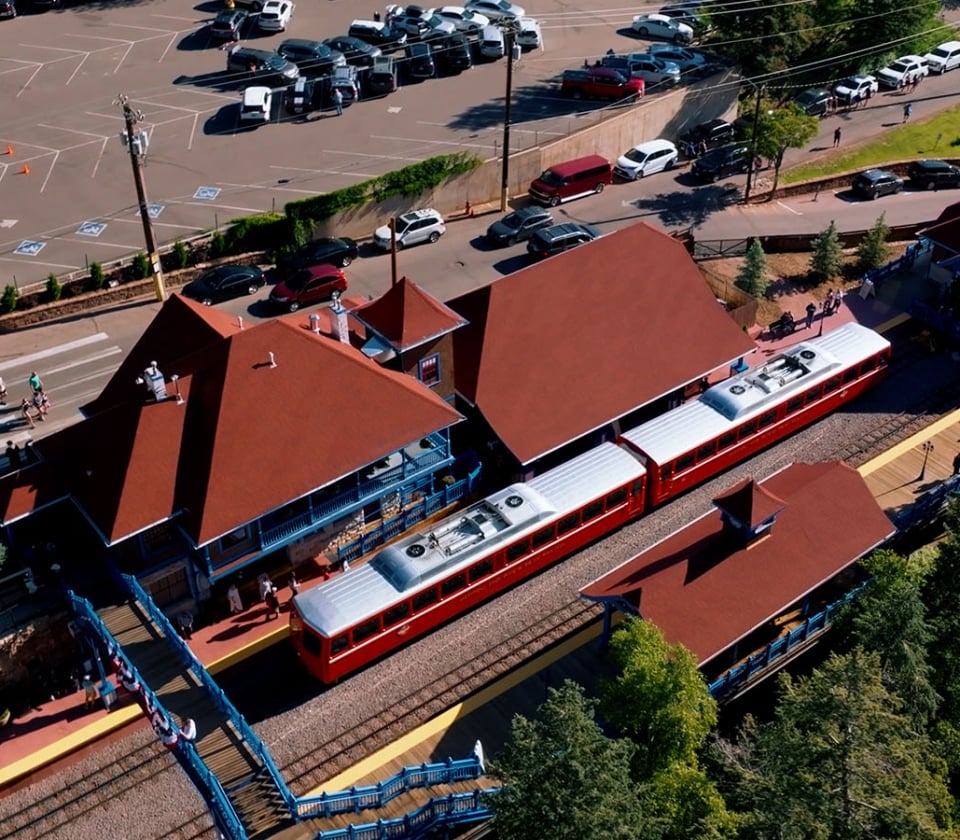
The historic depot is
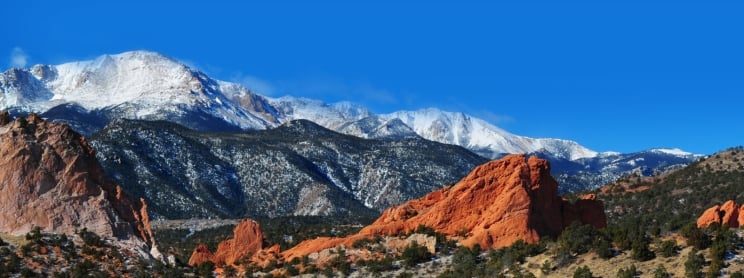
nestled at the base of Pikes Peak at an
elevation of 6571 feet.
--------------------------------------------------------------------------------------
Go
here for:
(Short videos of the trip)
----------------------------------------------------------------------

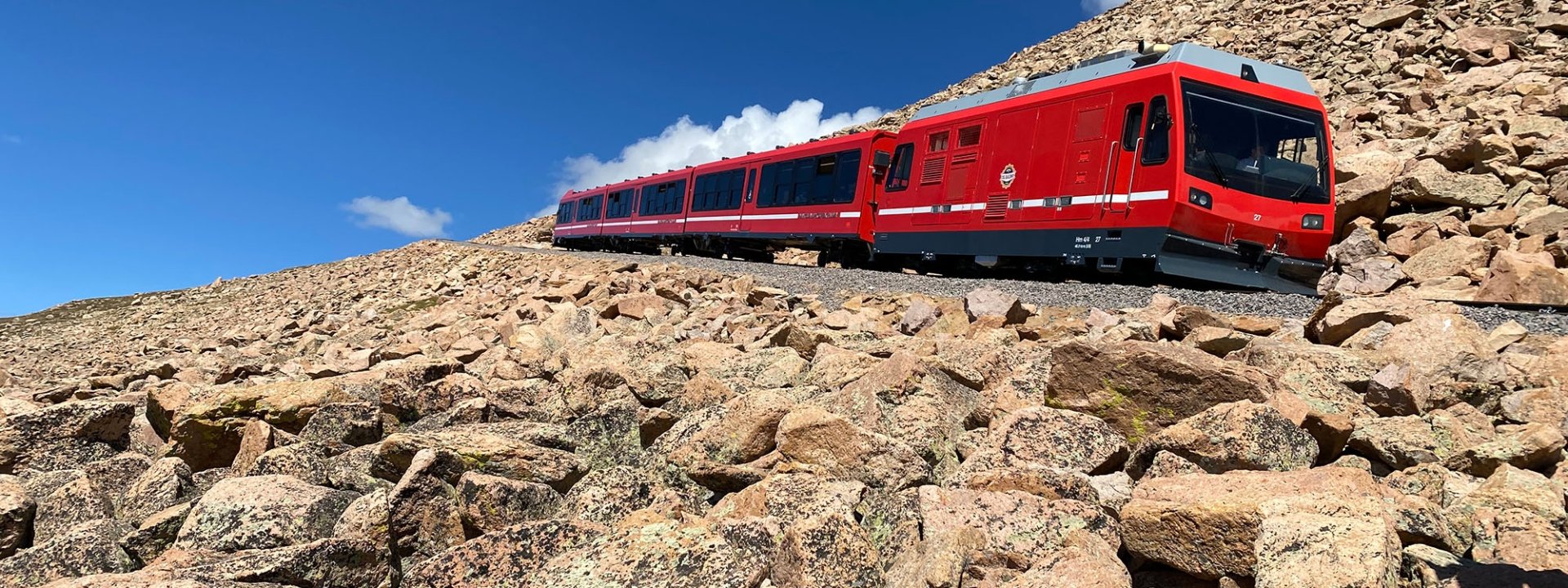
The track of the
Pikes Peak Cog Railway is 8.9 miles long. The round trip
lasts 3 hours and 10 minutes. (See Rates/Reservations for departure dates and times). The
first third of our trip is along Ruxton Creek in Englemann Canyon. Here the steep track
follows a cascading stream through dense stands of Englemann spruce, Colorado blue spruce
as well as Ponderosa pine trees. The track is built next to the stream and there
are boulder fields on both sides of the train. Conductors like to point out the
various "faces" and shapes which, with a bit of imagination, can be seen in the
giant boulders.
Right near the Minnehaha switch (where the down coming trains pass the up
going train on many trips) is Minnehaha Falls..

The middle third of the trip is on a gentler grade. Right below the old settlement of
Ruxton Park, the train passes through what is known as "Hell Gate",
a natural gateway in the mountains. After a few more minutes, the train passes
through Deer Park, where
passengers sometimes catch a glimpse of mule deer grazing.

Then we pass over the Four Mile
Siding and get our first glimpse of Pikes Peak! Another siding comes up,
Mountain View, which is the half-way point on the journey.
At about the 5 mile point, the grade steepens again. Now we begin climbing in earnest.
Lake Moraine and Mount Almagre dominate the views here.
Many of the trees in this area are bristlecone pine, some of the oldest
living things on earth! It is estimated that some trees on Pikes Peak are over
2000 years old. (There is an excellent internet site on these trees
.....it's at this link
http://www.sonic.net/bristlecone/home.html)
Once we climb above timberline, the views become more expansive. Timberline is the area
where trees stop growing. They cannot get enough moisture because, just under the surface,
there is permafrost: the ground remains frozen year-round. What does grow is Alpine
tundra; a mixture of mosses, grasses and wildflowers which have all adapted to the
extremely short growing season.

 Here passengers frequently see
Bighorn sheep and yellow-bellied marmots.

Pikes Peak is home to one of the largest
herds of Rocky Mountain Bighorn Sheep in Colorado.

The yellow-bellied marmot is the most
populous animal on Pikes Peak. These playful creatures sun themselves on rocks
and are noted for their piercing whistle which alerts others of danger (they are
also called whistling marmots). They hibernate during the winters.
Please see the section About Pikes Peak for more
information on the life zones found on Pikes Peak.
The last 3 miles are all above timberline. To the east stretch the Great
Plains out beyond the border of Colorado and Kansas. To the south, the Sangre de
Christo (Blood of Christ) Range stretches south to New Mexico. On the western horizon,
just slightly to the southwest, lies the Collegiate Range.
To the southwest at the base of
Pikes Peak, sit the old mining towns of Cripple Creek and Victor. Once upon the summit, if
the weather is clear (and there's not much Denver smog), you can see the skyscrapers of
downtown Denver.

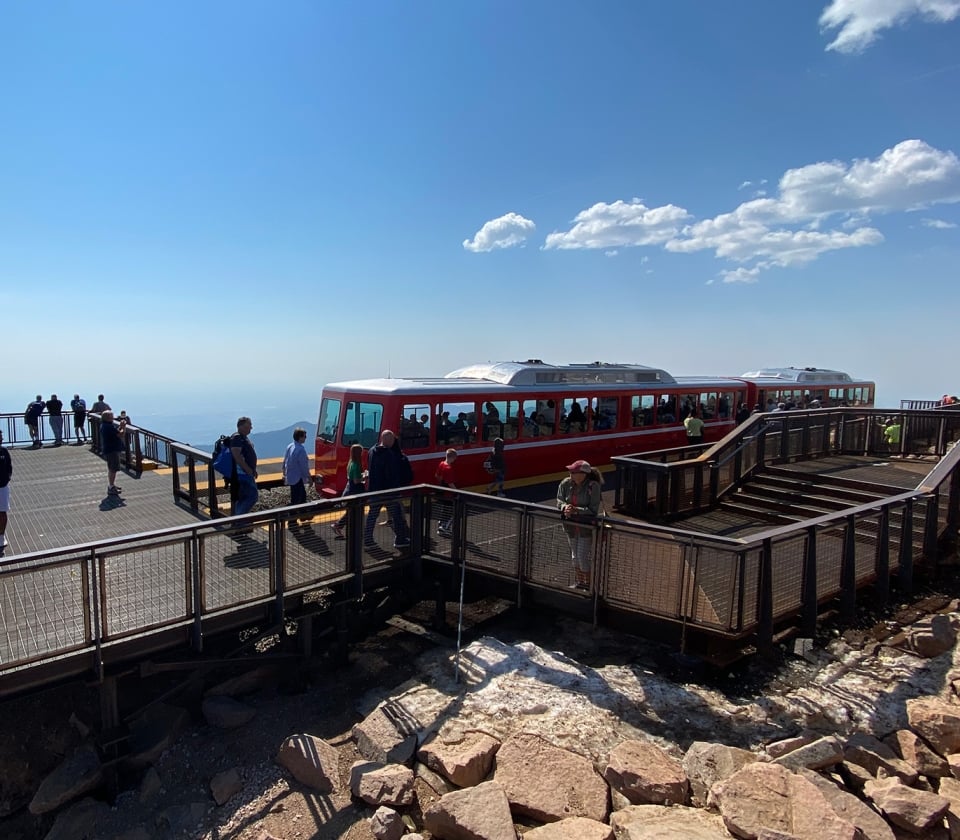
You are allowed 30 to 40 minutes on the top of Pikes Peak. The reason for
this is that most people begin to feel the effects of high altitude (slight nausea,
headache) after about this amount of time. We recommend that you budget your time
accordingly. In the high season, the summit house serves thousands of people daily. The
staff of ARAMARK (the concessionaire of the Summit House, which is owned by the City of
Colorado Springs) does an admirable job with a facility that was built in the 1960's and
was never intended to serve the numbers it does today. Consequently, long lines are quite
common especially in the food service area. The lines are generally longest at food
service right after the train arrives. You can bring food and beverages aboard the train
(those purchased from the Cog Railway Cafe; sorry, no
outside
food or beverages are allowed), but due to the limited
seating, you cannot bring outside food or beverages into the Summit House.

TIPS: what we recommend: FOR THE BUSY SEASON;
First, walk
around outside and enjoy the view and take pictures. The north side of the summit is most
dramatic with a breath-taking drop-off into what is known as the Bottomless Pit. BE
CAREFUL! ESPECIALLY WITH SMALL CHILDREN! Then walk over to the far side of the summit near
the High Altitude Research Station. This view of the Continental Divide is really nice.
After that, go inside and warm up, check the lines at the snack/gift area (try to eat
before or bring something on the train), use the restroom and then head outside to the
viewing platform on the south side. (In November,
December, January, February, March and most of April, you should purchase food at
the depot and take it with you on the train as food service is VERY LIMITED. In April
and early
May, you should get any food or beverage AS SOON AS YOU ARRIVE ON
THE SUMMIT, as the food service up there closes after about 20 minutes). The train crew will blow a long blast on the horn 10
minutes before the train leaves. Remember, you must return on the same train, and the
train leaves ON TIME! You get 30 to 40 minutes on the summit. It's a long walk down!..
(Short videos of the trip)


Cog Ry Home /
Along
the Route /
History /
About
Pikes Peak /
Rates-Reservations /
Gift Shop /
Special Events
/ SNOW / Swiss Trains /
Rail-Colorado
Links /
Employment /
What's
a Cog? /
Lodging /
DIRECTIONS
/
Maintenance / Coupon |